Showing posts with label New Diamond Point. Show all posts

Friday, September 5, 2025

Nearly a Waste of Time

You can nearly smell my frustration in the following image, which were taken in late 2023:


These are both marked “Collegian,” and I found the pencil at the Ohio show that year. It is marked only on the clip:


At that same show I stumbled across the pen, which has a stylized letter C on the clip. I felt the occasion called for bringing the pen home because it has a nice imprint, one that I just knew I had seen somewhere before . . . 


I could swear that I had a pencil that had the same imprint on the barrel somewhere, but search as I might in all the usual places, it was nowhere to be found. That, my friends, is more terrifying to me than you might suspect. By necessity, the museum is very tightly and meticulously organized; if something is put in the wrong place, who knows when I’ll see it again.

Throw that on top of my CDO tendencies (that’s OCD with the letters in the right order, for those who don’t know) and a simple case of something being misplaced blossoms quickly into something approaching a panic attack. When I say “search as I might,” I am talking about a couple of hours checking every place it should be, then every place it shouldn’t be . . . then doing it again. I even considered tipping a couple scotches in the hopes that Tipsy Jon might remember something that sober, neurotic Jon could not.

I was pretty sure the Collegian I thought I had was also in jade, and besides yearning to compare the two examples, I really wanted to know what the cap was supposed to look like. That’s also a little bit CDO, but there is a legitimate archival purpose: I’d rather have an example missing a cap than to replace it with something that fits but isn’t “correct.” 

The angst passed after I belted out a few cries of “serenity now!” (a la Costanza), and daily life resumed. I resigned myself that my other Collegian was lost for the foreseeable future, so I set about my normal process of comparing what I had to other things in the collection to figure out who made the Collegian. What I noticed were striking similarities to pencils made by Eclipse. The clip was not Eclipse’s distinctive 1923 patent clip: 


But that nose, with that little rib at the front end, was a dead ringer for other items in the Eclipse wing at the museum, and the clips used on Eclipse’s “Marxton” subbrand (named for Marx Finstone, Eclipse’s founder) is a dead ringer:


And with those images, I put down my camera and forgot about the whole affair . . . until the other day.

My “deal” at home is that my pencils remain confined to a single room, and I’ve mostly stayed within that Maginot Line with just a few minor encroachments. My pencil lead counter displays creeped into an adjoining room (because, after all, they aren’t technically pencils), and over the years I’ve stored some random ink bottles, desk sets and other miscellany on a bookshelf just outside the door.

Over the last couple months, I’ve started picking up dipless desk pen sets, without giving much thought to where I was going to put them. With no space in the museum, I decided to clear off that bookcase and make a nice display area (because, after all, dipless desk sets aren’t technically pencils, either). 

On one of the lower shelves, lower than I normally look and out of sight of those who patrol the Maginot Line, I had discretely tucked away a few pen and pencil sets that were nice, but which no longer fit in the area I kept other such sets. 

It was like Christmas morning, finding all of these sets I haven’t seen for a while, all of which have been pictured here over the years. There was that Parker 51 demonstrator set I had less aggressively been searching for, a few nice Eclipse sets, and this . . . 


If you heard a loud sigh of relief emanating from Ohio, that was two years of pent-up relief. There was the pencil I remembered, with the imprint I had remembered, and accompanied by a pen and warranty card. Better still, it answered my question:


The cap is a perfect fit for the one that had gone missing, and it looks just like what you would find on a comparable Eclipse pencil. Question one: solved. Question two now reared its head as I examined that warranty card:


The Collegian Pen Company was located at 333-339 Hudson Street in New York. Perhaps what I don’t know might actually be knowable, I thought: if I can track down that address, I should be able to remove any doubt who was behind the “Collegian” brand.

I did my usual search of period newspapers and unfortunately, nothing turned up other than the occasional stationer’s references that Collegian pens and pencils were for sale. Between 1925 and 1929, some advertisements included rudimentary drawings of flattop pens like those I've shown, and I did find one 1932 advertisement showing a streamlined pen that should have been close enough to a Sheaffer Balance to raise Walter Sheaffer’s ire. Nothing, however, provided any insights as to who produced or made the Collegian.

It was time for the Hail Mary: a good ol’ fashioned Google search combining “Collegian” with “333-339 Hudson Street” ought to draw out the answer, I thought.

It did.

Someone definitively answered that question.

It was me.

In my defense, it was more than ten years ago and there have been more than 1,500 articles posted here at the blog, but all that pointless muddling around had another “serenity now!” welling up inside me.

In “Captain Obvious” (January 24, 2016: Volume 4, page 109), I recounted how Marc Shiman, a student of New York pen companies and all-around good egg, had immediately recognized that address as being shared with the New Diamond Point Pen Company. In the article, I found my own independent verification of that detail and even shared this image of a nearly identical Diamond Point set:


If I was Captain Obvious ten years ago, now I am the Flat-Foreheaded Captain Obvious . . . mostly.

But there’s more, because my muddling around wasn’t so pointless after all. Remember how I started this article by noting the similarities between my Collegian and Eclipse products? That got me thinking . . . was there any connection between Diamond Point and Eclipse?

There was. And this time, I remembered what that connection was. I also remembered that I had written about it.

“A Death Most Untimely” (July 23, 2021: Volume 7, page 280) tells the story of Marx Finstone’s harebrained scheme to merge Diamond Point with Eclipse, which he put into motion shortly before Finstone’s untimely death in 1927.

It is easy to characterize Finstone’s plan as mere ruthless capitalism, gobbling up a competitor in the Wild West that was business in the 1920s. However, my unwitting comparison of the Collegian to Eclipse products suggests a new dimension to the scuffle that ensued. If Diamond Point and Eclipse were both sourcing identical components from some third-party supplier, maybe Marx wasn’t simply trying to eliminate a competitor for its market share . . . perhaps he was eliminating another customer for the same parts Eclipse was using – to give himself more leverage in negotiating more favorable pricing from his supplier.   

Of course, that contains an element of conjecture, since Finstone wasn’t alive to testify in the court case that provided what we know about the dispute. However, that explanation paints Finstone as more of a shrewd businessman than a megalomaniac, and I think that explanation makes more sense.

Friday, July 23, 2021

A Death Most Untimely

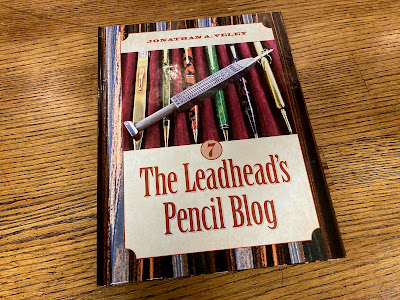
This article has been included in The Leadhead's Pencil Blog Volume 7, now available here.


If you don't want the book but you enjoy the article, please consider supporting the Blog project here.

As detailed in yesterday’s article, Marx Finstone’s personal history is a convoluted one.  Maybe the editors of the New York directories just couldn’t get the poor guy’s name right, calling him “Mark Finston” and “Max Finstone” at times.  Then again, maybe Finstone was deliberately adopting aliases; before the unincorporated “Eclipse Fountain Pen Company,” who knows what pen brand names Finstone used?

Was Finstone deliberately trying to throw people off his trail?  Perhaps . . . after Finstone’s sudden death on December 22, 1927, his secret master plan was revealed: to merge The Eclipse Pen and Pencil Company with its biggest competitor, the New Diamond Point Pen Company – without Diamond Point knowing it.

First, for bit of background about the New Diamond Point Pen Company.  The company’s early history spilled out in a lawsuit filed decades later, on August 6, 1943 (Kolber v. Kolber, New York Supreme Court).  Briefs filed in the appeal of that case neatly lay out the ownership of New Diamond Point, beginning in 1921 when Charles Flaum, a wealthy businessman with no experience in the pen business, wound up with 100 percent of the shares in New Diamond Point after his son-in-law passed away.

Flaum was “anxious to find associates who would take a more active part in the business.”  Morris Kolber left the liquor business to become a shareholder, as did Morris Neulander, a milliner, and each of them bought 25 percent of the company’s stock.  Morris Kolber was in charge of manufacturing, and Neulander handled shipping for the company.  

Between 1921 and 1925, Flaum sold another 25 percent of the stock to Nathaniel S. Worth; shortly after, Nathaniel’s son, James V. Worth, joined the firm, and he became an equal owner of New Diamond Point’s shares – as of 1925, the five shareholders (each owning 20 percent) were Flaum, Kolber, Neulander, Nathaniel Worth and James Worth.  The Worths became dissatisfied with New Diamond Point and started looking for other options . . . 

Enter Marx Finstone, owner of all but two share in Eclipse Pen and Pencil Company.  

In 1926, Marx was obsessed with finding a way to merge his Eclipse Pen and Pencil Company with three other New York pen companies:  New Diamond Point, Salz, and J. Harris & Co.  His overtures to New Diamond Point had been flatly refused – the Worths and their 40 percent stock ownership supported the merger, but they were outvoted by the other three shareholders.  The unhappy Worths and Finstone therefore hatched a plan for Finstone to secretly accomplish what New Diamond Point had publicly refused.

The plan went sideways, and in retrospect it would have failed anyway; however, Finstone’s untimely death hastened the lawsuit that was filed in New York Supreme Court, Nathaniel S. Worth v. Charles Flaum.


On December 26, 1926, the Worths and Marx Finstone entered into a contract providing that the Worths would come and work for Eclipse.  Each of them would trade their 80 shares in New Diamond Point for shares in the Eclipse Pen and Pencil Company of equal value – the number of shares was left blank in the contract until the accountants could finish Eclipse’s annual report, which would provide the value of Eclipse stock.  

The parties acknowledged in their agreement that the Diamond Point shares were subject to a shareholder agreement dated February 14, 1924, which required the Worths to give New Diamond Point 60 days’ notice before selling their shares.  New Diamond Point would have the right to repurchase them first.

In January, 1927, Eclipse’s accountants concluded that the 80 shares each of the Worths owned was worth the equivalent of 62 shares of Eclipse common stock and 536 shares of preferred stock.  On June 30, 1927, James handed over his New Diamond Point shares to Finstone, and Finstone issued shares of stock to James Worth as provided in the agreement.  

Nathaniel, though, had a problem.  He didn’t tell Finstone that he had bought his shares in New Diamond Point from Charles Flaum on a installment payment plan, and Flaum was still holding Nathaniel’s shares as collateral until they were paid off.  There was still $2,700.00 due.

Nathaniel claimed – after the litigation started – that at the time the contract was signed, he didn’t say anything to Marx Finstone about his deal with Flaum because he thought he would be able to just walk into Flaum’s office, hand him $2,700.00, get his shares and bring them back to Finstone to trade them for his Eclipse shares.  

Nathaniel was a moron.

The record is unclear whether either of the Worths ever gave notice to New Diamond Point that they were selling their shares, but either way the “secret” infiltration of Marx Finstone into the company could not possibly have been a secret.  The remaining shareholders in New Diamond Point had just voted that they did not want to be in business with Marx Finstone.  

If shortly after that vote the dissenting shareholders gave notice that they were selling their interests, New Diamond Point would know Finstone was trying to sneak in the back door and, with Charles Flaum’s vast resources behind it, New Diamond Point would certainly repurchase the Worths’ shares.

Therefore, it is not surprising that when Nathaniel Worth walked into Charles Flaum’s office with $2,700.00 to pay off the balance due on his New Diamond Point shares, Flaum refused to accept it and refused to turn over Nathaniel’s share certificate. Finstone refused to give Nathaniel any shares in Eclipse until he could produce the share certificate, so Nathaniel gave Finstone $3,000.00 – apparently, the $2,700.00 plus something for interest accrued on the debt – and Nathaniel testified that Finstone was going to go and personally demand the shares from Charles Flaum.

By late 1927, Nathaniel had given Marx Finstone $3,000.00, he didn’t have his New Diamond Point shares, and Finstone had not yet issued him his Eclipse shares.   Right at that critical moment, on December 22, 1927, Marx Finstone suddenly died.  David Klein testified that he was present when Nathaniel confronted Finstone’s widow, Lillian Finstone, and demanded his shares in Eclipse.  In response, Lillian simply fired him.

Without Marx Finstone’s leadership, Eclipse quickly ran into financial trouble and was placed in receivership, while the executors of Finstone’s estate scrambled to pick up the pieces.  By the time Nathaniel Worth filed his lawsuit, all parties were in agreement that shares of stock in Eclipse were essentially worthless.

The lawsuit Nathaniel filed was against Charles Flaum, demanding the return of his shares in New Diamond Point.  Nathaniel claimed he had the right to sue for them pursuant to a part of his agreement with Marx Finstone, which required him to do so in order to keep his dealings with Marx a secret.  On the other hand, lawyers for Finstone’s estate argued that since Nathaniel had already sold all of his interest in New Diamond Point in exchange for the now worthless shares in Eclipse, if anyone had the right to sue Charles Flaum, it was Finstone’s estate.

This entire history survives only because the Court denied Nathaniel’s request to switch lawyers, and Nathaniel appealed that minor procedural ruling.  There’s no written opinion I could find which explains what ultimately happened in Nathaniel’s case – at least, not directly.  

The 1943 litigation between the Kolbers over the ownership of New Diamond Point contains an offhand remark by one of the attorneys which clarified the ultimate outcome:  “Around 1926, as a result of litigation the two Worths sold their shares [in New Diamond Point] to the remaining members of [New Diamond Point] for a total price of $21,221.50, financed in equal shares by the purchasers.”  

All that effort the Worths and Marx Finstone put into their scheme was for naught; predictably, New Diamond Point repurchased the shares of the company rather than allow them to fall into the hands of Finstone’s heirs.  For the Worths, it was somewhat of a happy ending – at least they were compensated for their investment in cash, rather than being forced to exchange it for worthless stock in Eclipse.

Eclipse, for its part, survived its receivership; apparently, once Finstone’s executors sorted out this mess (and likely, many others Finstone left behind), the company was able to recover.  M. David Klein (who was Finstone’s brother in law, as he stated in an affidavit filed in the 1929 appeal) took over leadership of the company, which thrived at least as well as any pen company could during the Depression.