Showing posts with label Heath. Show all posts

Wednesday, November 19, 2025

Bullets and Flowers

No, I still have no idea what my “favorite” pencil is out of the more than 20,000 in the museum. Heck, I couldn’t even tell you which one of the pencils Gabriel Goldsmith has sent me over the last couple months is my favorite, since each has its own merits. 

That being said . . . at least out of Gabriel’s stuff . . . it’s this one.


“Bullet pencil” typically refers to those cartridge-shaped holders containing a reversible wood pencil mounted on the rear end of the “bullet.” This is a more convincing representation of a rifle cartridge, other than the ringtop at the end, with a nose-operated leadholder clutch at the business end (sort of like those Mabie Magazine pencils from a few days ago). The back end extends for more comfortable writing, and it has an American hallmark:


What looks like an H in brackets identifies the pencil as made by George W. Heath & Co.  The mark is included in American Writing Instrument Trademarks 1870-1953, but not as a federally registered trademark; it is included in the appendix, which excerpts the writing instrument trademarks included in various editions of Trade-Marks of the Jewelry and Kindred Trades. The Heath mark was first listed in the 1904 edition:


Before I got around to writing this one up, David Nishimura and I had partnered on that Victorian collection from Rob Bader and two other Heath pencils found their way into my pile. I offered them to David first, since Heath is a special interest of his, and I was surprised he didn’t claim them:


At top is one that is near and dear to my heart: Heath advertised these as its “new clutch pencil for insurance men” in 1912, as detailed on page 42 in Eversharp: Cornerstone of an Industry.


The reason I like these so much is because shortly after Heath introduced these, Charles Keeran darkened Heath’s doorstep and hired the firm to make his first Ever Sharp (it was two words in those days) pencils. Heath simply retrofitted these clutch pencils to accept Keeran’s screw drive mechanism, and the rest is history. 


I didn’t have a plain gold filled example, and this one is just pristine. The “G.W.H. Co.” mark is only visible when the top is unscrewed a bit to release the lead:


I thought I might have overestimated David’s interest in these until David Yager stopped by my table later during that DC show to chat. Yager had a tray of Heath pencils for show and tell, and Nishimura’s eyes lit up like a kid who just got his first ten-speed for Christmas when he saw them.


Alas, these were for show and tell only, and I’m just glad to get a reasonably good cell phone photograph to share. Most of these are Heath clutch pencils, including the three more scarce short versions at left. The three with steel tips at right are early Ever Sharp pencils made by Heath.

The other Heath pencil that came from Rob’s collection is that high-relief magic pencil. I knew I had something along those lines at the museum, but this is the sort of thing that you don’t turn away even if it’s a duplicate. I was glad to find when I got home that the new addition was related to but very different from the one I had.


As I was writing this up, I stumbled across something in my notes – Nishimura posted a nice article about George W. Heath & Co. at his blog which included a link to an advertisement for Heath’s magic pencils. I had seen the ad before, but at a website that didn’t fully attribute its source – thanks to David’s link, here it is, as published in The Jeweler’s Circular on August 20, 1902. 


The advertisement matches the pattern on the one at bottom and identifies it as Model 905M. I would suspect that the other had a different designation, but until a detailed Heath catalog emerges, that bit of esoterica will have to wait. 

Both of these magic pencils also have Heath’s hallmark on the extender; while I previously indicated the Heath mark was first reported in the 1904 edition of Trade-Marks of the Jewelry and Kindred Trades, we know from the advertisement that it was in use earlier. Also, since the 1896 edition of the book was so rudimentary, I can’t rule out that Heath might have used this mark even earlier and perhaps from the outset, when the firm was first established in 1892.

After I shot these images for this article, I was disappointed that they did not do justice to Heath’s craftsmanship, since the fine engraving on the bullet pencil was obscured by the patina.


“W.W.D.D.,” I thought to myself – as in what would David Nishimura do. First, do no harm. Second, don’t overclean, because sterling is soft enough that the detail I want to reveal can be worn down as quickly and easily as Lady Liberty’s flowing hair on a silver coin as it rattles around in your pocket. Carefully, carefully . . .


Now THAT’s what I wanted to show you.

Saturday, August 16, 2025

Wrong in the Right Way

The only difference between fiction and nonfiction is accuracy. Statements in print that are later proven wrong can demote an entire work from a scholarly text to a pretty picture book.

“This is what I have observed, here is how it compares with what I know, and here is what that evidence leads me to believe,” is how I approach new conclusions. In those terms, new evidence does not prove anything I said wrong, since all I’ve provided is a snapshot of what I thought I knew at the time. If anything, I’ve invited further study and the greater understanding it yields.

That being said, print publication is cruel. Once a book is printed, all the author can hope for is that it encapsulated as accurately and as completely as possible all of the knowledge that was rattling around upstairs as of the moment it was committed to print. If everybody waited until they know everything there is to know or that will ever be knowable to write a book, there would be no books. 

Eversharp: Cornerstone of an Industry thoroughly exhausted me. I poured into it everything I have learned about the brand over the last 25 years, and I believe it will remain a valuable reference long after I am gone with all the information it contains. However, I know nothing is complete, and I knew that I’d be circling around with updates and corrections.

Just not too many, I hoped. And not too soon.

This is my longwinded way of telling you that at the end of Eversharp: Cornerstone of an Industry, I posed a question that was unnecessary, because I had the answer right in front of me. That answer adds a little bit of context to the Eversharp story that, had I remembered it at the time, I might have added it into the book.

I am proud, however, to report that I was wrong in the right way.

On average, my books are “done” two or three months before the printed books are available. During that time I’ll make last minute tweaks, but it becomes more and more difficult as the production process moves forward until it’s time to call – literally – “pencils down.”

The Eversharp book had been picking up steam for months through 2024, with contributors offering me artifacts to photograph or acquire for the book. The law of inertia applies: new finds were continuing to arrive even as the printers were asking for proofs.

By the 2024 DC Show in August, the book was essentially complete, subject only to a final round of editing with the assistance of that most loyal knight Richard Keith. At the show, I picked up a few additional things to include in the book – no worries, since I do my own layout – reshooting and substituting images was still a simple matter.

Mostly.

Right before that show, an online auction yielded a solid gold early Heath-clip Ever Sharp, which I had referred to but had not shown in Chapter Three. By the time I had it in hand for photography, the layout was so tight that there was nowhere I could squeeze it in. I added one last page to the book: page 434, titled “Stop Press,” includes several images of that important find, and I was able to work a reference to page 434 into one of the captions in Chapter Three.


This article is not about that pencil. That “stop press” page, however, opened the door for what I’m going to tell you next.

At the DC Show, I reconnected with Myk Daigle – a fervent supporter of my research and the books I write. Myk had a couple parts on hand, and he gave them to me. “Maybe you can use these in your book,” he said.


I tucked them away to look at when I got home. If I can match these up with the metal Eversharp model to which they belong, I thought, I can swap these caps over and reshoot the images in which those models appear.

There was a problem.

I turned to pages 64 through 67 in the book, which provide a four-page table detailing every cataloged pattern of metal Eversharp pencil, together with the years in which each was cataloged and their model numbers.

Wahl’s catalogs did include a Model 22; it was the barleycorn pattern listed only in 1921, but it was only offered in gold-filled – nothing in silver plated or sterling.  Model 034 similarly made no sense, because Wahl did not use any model numbers with a leading zero and besides, Wahl’s model conventions provided that ringtop model designations ended with the suffix “SW,” for “short with ring.”

These were the first square-peg model designations that did not fit neatly into the round holes I had already documented in the book. I had to acknowledge it, so I used the last couple inches at the bottom of the “Stop Press” page 434.

Here’s the part where I got it wrong in the right way.

I said only what I knew. I explained how Model 22 and 034 did not fit into what I had compiled with respect to Wahl’s model designations, and the book ends with this statement: “Perhaps these were for Heath’s clutch pencils or Heath-made pencils marked for the Carey Pen Company, both of which used these same caps (see pages 42-44). Perhaps also there is something more to learn about these, still out there and waiting to be discovered.”

Observation, evidence, and a guess based on that evidence. Ending with an unanswered question like that is a valuable acknowledgment that any book exists in a continuum, as a statement of what was known at the time in a universe that will inevitably expand. Some day, I hoped, someone would come forward with the answer.

I didn’t know it would be me.

And I didn’t know I already had it.

While I was writing the Sheaffer and Eversharp books, I continued to add other things to my collection - but to keep my work table clear and stay focused, I was diligent about photographing new additions and putting them away to keep them out of sight and out of my easily distracted peripheral vision.

One of the things I had turned up along the way, back in February 2023, was a group of pens and pencils made by the DeWitt-LaFrance Company in Cambridge, Massachusetts – best known as the makers of the “Superite” brand of pens and pencils. The lot had surfaced in an online auction:


Yes, I do pick up fountain pens when the occasion calls for it – and when it comes to a cult brand of which I am a rabid devotee – the occasion calls for it. I had not seen a Superite fountain pen with a price band:


I shot these images in March, 2023, just as the Sheaffer book was being released and nearly a year before work began on the Eversharp book. If or when the blog restarts, I thought to myself, I’ll write something about these.

This was not what I had planned to write.

After the dust settled with the Eversharp book, and page 434 along with all its other pages were irrevocably committed to print, I dusted off that file folder of pictures, and I noticed that the top two pencils in that group shot had price bands that strongly resembled those found on early Ever Sharp pencils. I wondered . . . 


The example second from top is marked Model 10-B, printed in the same font as Myk’s Model 034 ringtop cap.

Which leads me to the coup de grace:


There it is: the Model 22 cap that Myk Daigle gave to me came from a Superite. Oh, I was so close . . . I had suggested Myk’s caps might be from a Heath-made pencil, and while that guess was wrong, it is fascinating that Superite pencils have caps that are identical to those on an Eversharp.

George W. Heath & Co. made the earliest Ever Sharp pencils, using modified and repurposed barrels from their clutch pencils (and which were also rebranded for the Carey Pen Company). When Wahl took over production of Keeran’s Ever Sharp in October 1915, it was because Keeran was frustrated that Heath could not keep up with his orders. Given Heath’s apparent refusal to allow Wahl to use his patent pending clip (as evidenced by Keeran’s hastily designed spade clip and John Wahl’s tombstone clip), Heath apparently did not take kindly to the transition.

It would be unreasonable to think that Heath would dig in its heels on the use of Heath’s clip, but would nevertheless willingly cooperate in supplying caps or the tooling used to make them . . . Wahl likely copied them, since the basic crown-shaped design was not the subject of any design patent or trademark and was in the public domain.

That would leave George W.  Heath & Co. with idle tooling and perhaps a supply of parts in late 1915 . . . and DeWitt-LaFrance burst onto the scene out of nowhere in 1918. I now believe that Heath either supplied caps or sold tooling to the fledgling DeWitt-LaFrance Company so that Superite pencils would sport caps so similar to those on an Eversharp that a couple of them erroneously wound up in a book about Eversharps.

There’s more evidence to support this theory: as I noted in “Wahl, Sheaffer, and the Race for Boston” (beginning on December 26, 2016: Volume 4, page 300), by 1921 the Wahl Company had noted it had hundreds of competitors who had copied the outward appearance of the venerable Eversharp. The Wahl Company only sued one of them: DeWitt-LaFrance (Volume 4, page 325).

I had previously thought Wahl singled out the makers of the Superite for litigation because DeWitt-LaFrance was one of the more successful companies offering writing instruments that looked like an Eversharp. Given what I have learned, I now theorize that the purpose of the litigation was to knock out a competitor that was producing parts that looked exactly like Eversharps - the very parts Wahl had copied in the first place.

Let’s add one last potential morsel to this theory. Here’s the nib from that fountain pen in the group:


Note the “H.” 

I asked David Nishimura whether that could designate “Heath,” but he does not recall any evidence that George W. Heath & Co. made its own nibs, and suggests it might stand for “Hicks” or something else.

And it starts again. Observation. Evidence. And a guess.

Sunday, August 8, 2021

Square Pegs Are the Best

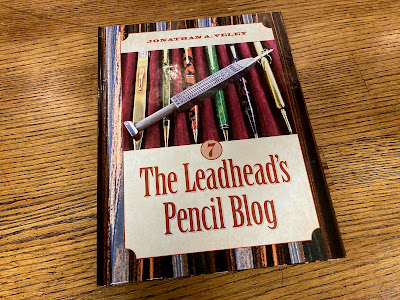
This article has been included in The Leadhead's Pencil Blog Volume 7, now available here.


If you don't want the book but you enjoy the article, please consider supporting the Blog project here.

In “To Out-Heath Heath” on July 19 (https://leadheadpencils.blogspot.com/2021/07/to-out-heath-heath.html), I wrote about Charles Keeran’s decision to change suppliers for his Ever Sharp pencils in October 1915, from the George W. Heath Co. to the Wahl Adding Machine Company.  Keeran claimed the move was to increase production - he had no qualms about the quality of Heath’s work, but Heath wasn’t able to keep up with the demand for Ever Sharp pencils.  

The transition appeared to be a clean break, with no overlapping production.  Heath did not license Wahl to use Heath’s patented clips, so the earliest Wahl-made Ever Sharp pencils sport Keeran’s hastily improvised “spade clip,” for which Keeran applied for a design patent he applied for a patent on April 4, 1916.  After Keeran’s clip proved too labor-intensive in production, John Wahl applied for the familiar tombstone-shaped clip found on millions of Eversharps on March 8, 1917 (note: Wahl contracted “Ever Sharp” to “Eversharp” in 1918).  

As mentioned in my July 19 article, Wahl also had to cook up engine-turned patterns for the barrels on these pencils from scratch.   “Apparently, Heath wouldn’t share tooling or otherwise allow Wahl to make the same patterns for Keeran’s Eversharps, either – the patterns found on Heath-clip Eversharps are generally not found on pencils made by Wahl,” I wrote.

I narrowly avoided being wrong.  Scratch that . . . maybe I should say I narrowly avoided drilling a round hole, into which today’s square peg doesn’t fit.  I thought, but did not say, that Wahl made everything in-house from day one and did not source any parts from Heath.

After that last article ran, Douglas Heinmiller, who contributed several images to A Century of Autopoint, emailed me some pictures of an Ever Sharp that fits within the article I wrote, but not within what I was thinking when I wrote it:


This example sports one of John Wahl’s patented tombstone clips – which I should think means it was made after Keeran made the move to Wahl in October 1915, and even after Wahl abandoned Keeran’s spade clip.  There’s one H of a problem, though.  Two “H’s,” actually . . .


Both the cap and the barrel are stamped with George W. Heath’s hallmark.  Heath’s mark is included in American Writing Instrument Trademarks 1870-1953 – not as a Federally registered mark, but in the appendix, illustrated in the 1904, 1915, and 1922 editions of Trademarks of the Jewelry and Kindred Trades:


Douglas’ pencil is fascinating, because it does not square at all with the completely consistent story we thought we knew.  It is the first example of an Ever Sharp I have seen with Heath hallmarks; not even those earliest Ever Sharps with Heath’s patented clip bore these markings (Heath-made Ever Sharps are identified solely by Heath’s patented clip and distinctive metalwork).  

The mark suggests that Heath supplied at least this cap and barrel to someone else, and the obvious buyer would be the Wahl Adding Machine Company . . . that possibility seems less obvious, however, upon closer examination of the pencil.  Eversharps that sport John Wahl’s patented clip have a very clean, precise tombstone cutout into which these clips fit, as shown in Wahl’s patent drawings: 


Douglas’ pencil has a more rough-cut opening to accept the clip, with gaps that are uncharacteristic for pencils made by Wahl; perhaps it was a retrofit, made by cutting out the area which would have been punched for a Heath patented clip:


One interesting possibility I considered is that Wahl’s patented clip might actually have been an innovation which originated in Heath’s facility rather than in Wahl’s.  According to the patent application, John Wahl was actually the co-inventor of the clip, along with William H. Odlum, also of Chicago:


This was Odlum’s only writing instrument patent; much later, he patented several other innovations in machinery, but none were assigned to Wahl.  Could Odlum have invented a version of Wahl’s clip earlier, while he was working for Heath?  I found no evidence to support that theory, so that is just bare speculation.

One logical explanation is that Heath had leftover barrels after production of Ever Sharp pencils was transitioned to Wahl; that might also explain why the Ever Sharp imprint is double-stamped.  Perhaps Heath re-stamped retrofitted barrels to add the company’s hallmark before offloading them to Wahl:


Although this explanation seems to be the simple answer, it has its problems.  Why would Wahl, firmly established in manufacturing pencils by the time the Wahl-clip pencils were in production, have any interest in crudely retrofitted barrels stamped with Heath’s hallmark – especially plain barrels with none of Heath’s superior metalwork? 

There’s one other possibility.  In Charles Keeran’s 1928 letter to Wahl's directors, he accused Wahl of muscling him out of his ownership in the Eversharp Pencil Company; on the other hand, Wahl’s version of the story is that Wahl accepted Keeran’s stock in the company in lieu of payment for pencils sold on credit when it became apparent Keeran would be unable to pay for them.  Wahl’s version is likely the accurate one.

There was probably a time, sometime in 1916, when Wahl declined to supply Keeran with any more Ever Sharps until some arrangement had been made to pay for the stock Wahl had already delivered to him.  Perhaps Keeran scrambled to find another supplier, knocking once again on Heath’s door to see if the company would make his pencils.

The timeline for this possibility both fits and doesn’t fit.  The patent for Wahl’s clip wasn’t filed until March, 1917 – long after Keeran had been divested of his shares in the Eversharp Pencil Company, which doesn’t fit.  

However, when the patent application was filed is telling.  By March, 1917, Keeran’s relationship with Wahl was strained, and within a couple months he would be ousted from Wahl entirely.  During that tense time, Wahl might have filed the patent application for this clip months after it was developed, perhaps by Odlum and perhaps with Keeran’s input, after it was clear Keeran was on his way out.

If Odlum had developed this clip earlier, while Wahl was still supplying pencils for Keeran rather than making them on its own account in 1916, Keeran might have considered the innovation a “work for hire.”  He might have felt entitled to take Odlum’s clip with him over to Heath, to see if they could make one like it, which Heath did – although somewhat crudely – repurposing leftover parts.  After Wahl acquired Keeran’s stock in the Eversharp Pencil Company, Wahl would most certainly have put a stop to that.

All three of these possibilities are interesting.  Maybe Heath actually developed what we now refer to as the “Wahl clip.”  Maybe Heath dumped its leftover parts on Wahl.  Maybe Charles Keeran re-engaged Heath briefly just before he lost a controlling interest in his Eversharp Pencil Company.

All of these theories are thin.  However, any one of them might some day prove true, and any one of them would add an interesting footnote to the early history of the Ever Sharp.

Saturday, March 28, 2020

Well Worth a Hop Across the Pond

This article has been edited and included in The Leadhead's Pencil Blog Volume 6, now on sale at The Legendary Lead Company.  I have just a few hard copies left of the first printing, available here, and an ebook version in pdf format is available for download here.

If you don't want the book but you enjoy this article, please consider supporting the Blog project here.

Way back in 2013, I pined for a pencil I thought I would never be able to afford:


It was made by the George W. Heath Co., using the same snake pattern the company also used to fashion overlays for Parker’s fabled snake pens in the 1910s.  It was shown to me for photographing, but the seller wasn’t ready to part with it -- short of paying him the equivalent of what it would take to buy a good used car, of course.

(The article was posted on August 21, 2013; these days, it only exists in book form, in Volume 2 of The Leadhead’s Pencil Blog, pages 223-224.)

In late 2018, I received a long-distance call from England – the famed KB Collection, perhaps the finest collection ever assembled of figural Victorian pencils, was going up for auction at Wooley & Wallis Auctions in Salisbury, England, and the call was to ask if I wanted a catalog and to invite me to attend.

Sure, I said.  In the back of my mind, I thought that would be a nice book for my shelf and probably nothing more.  Joe Nemecek is the real figural collector between the two of us (he had also received an invite), and I didn’t see how it would make sense to travel across the Atlantic to look at things that probably wouldn’t interest me.

The catalog arrived, and suddenly I saw that it would make sense.  There it was, Lot 232 . . . another example of a Heath snake pencil.  It wasn’t described very well in the catalog, as merely an “unmarked American pencil.”

If ever I had a chance to own one of these, this would be it.  The pencil wasn’t identified as a Heath, and as opposed to venerated British brands, the dismissive description of it as just a meager offering from a former colony and the correspondingly low auction estimate meant there was a possibility I might actually be able to get it.

But only if I was there.  You have to be extremely careful spending large amounts of money on Victorians, since it's impossible to evaluate the condition of one of these from a picture. A thorough inspection of everything you plan to bid upon is an absolute must.

I talked to Janet, who usually says she doesn’t want to go on a vacation if there’s pencils involved.  Five days, I said.  One to get there, two for preview day and auction day (with evenings free to do as we want), a full day to enjoy the town of Salisbury, and one to get home.  If I didn’t get the pencil, at least I’d get to see the greatest collection of these pencils before it was dispersed to the four winds and we’d get a nice trip out of the deal.

Our journey was probably our best vacation ever, not even taking the auction into account.  We toured Salisbury Cathedral, saw the Magna Carta, made ourselves at home several times at The Haunches of Venison (a pub founded in 1385).  We spent some great time with Jim Marshall and his wife, including a lovely dinner.  We came, we toured, we shopped and we had a great time.

And on top of that, there was the auction experience of a lifetime.  Woolley & Wallis set me up at a table with a nice cup of tea for the preview, allowing me to view and handle pencil after pencil for about three hours.  I was even able to repair a couple pencils which had become damaged by careless buyers during the preview, which endeared me greatly to the staff.

Auction day was fascinating.  There were only about ten people present in the house, with the auctioneer placing advance bids and accepting online ones during the course of the auction.

When lot number 232 came up, my heart was beating in my throat.  No, it wouldn’t make or break our mini-vacation, but I had a budget.  My competition was bidding online, so I had the advantage – the snake was perfect and I knew it, but from afar, with just one picture and a catalog description to go on, anyone else wouldn’t know what they were risking.

I won, for what I considered an insanely reasonable price -- so reasonable that I decided to save the rest of my budget and try to get the Tiffany Metropolitan Life pencil that was later in the auction . . . alas, I was vastly outgunned on that one, so other than a couple end of auction odds and ends, the Heath was my real score for the day.

And I was absolutely elated.

News spread of my acquisition when I returned to the States, and I received a surprising message from my friend Pearce Jarvis: he had the matching dip pen, if I was interested.

He told me the price, and I gulped a little bit.  It was a lot of money for something I don’t collect.  However, by the time we got together at the DC Show, I had come to terms with the fact that I couldn’t pass the opportunity.  They had to be together, I said to myself, and besides – the total for both was less than my budget for just the pencil.

So here they are, as they rest comfortably in the Heath section of the museum:


The Heath mark - an H within brackets, appears prominently on both pieces:


The pencil, just like the Parker snake pens, has a snake with green eyes – I don’t know whether they are glass or emeralds.  For whatever reason, on the dip pen Heath dispensed with the inset eyes:


I’ve never traveled so far, and been so happy, for the purchase of a pencil!

Monday, August 28, 2017

A Few Heaths

This article has been edited and included in The Leadhead's Pencil Blog Volume 5; copies are available print on demand through Amazon here, and I offer an ebook version in pdf format at the Legendary Lead Company here.

If you don't want the book but you enjoy this article, please consider supporting the Blog project here.

George W. Heath & Company is one for which I’ve got a real soft spot.  The Newark, New Jersey manufacturer made really nice stuff, not the least of which was Charles Keeran’s first Ever Sharp pencils, between 1913 and October, 1915.  Here are a few things that turned up while I was reorganizing the museum:


The magic pencil at the top is a fairly conventional piece, although that silverwork is outstanding.  The Heath hallmark - an H in a square with two tabs on either side, appears on the extender:


The mark does appear in American Writing Instrument Trademarks 1870-1953, but not as a federally registered mark; at the end of the book, I’ve included an appendix containing the pen-related sections of Trade-Marks of the Jewelry and Kindred Trades, published by the Jewelers’ Circular Publishing Company in 1896, 1904, 1915 and 1922.  Of the four editions, only the one published in 1922 is readily available (there’s a copy in the PCA’s library) – the others took quite a bit of digging to find.  Heath’s mark first appears in the 1904 edition (even though the firm had been established in 1892, the book's rudimentary 1896 edition didn't include it).  The address provided is Heath's earlier address in New York:


Heath apparently used the hallmark only on the company’s silver products.  It also appears on the cedar pencil holder at one end:


However, the two gold-filled magic pencils, are marked “G.W.H. CO.”:


All three of the magic pencils came from one source at the Chicago Show in May.  I was convinced that the silver one was also made by Heath, since that Jules Verneish profile was fairly unique to the maker.  However, the barrel was unmarked, and the extender is marked only with “Compliments of Metropolitan Life Insurance Company - 1909":


I was talking about this one to someone at the show -- probably David Nishimura, since he also appreciates Heath and he has a knack for pointing out little things that I’ve missed – and he pointed out the unusual location of the hallmark on this one:


On the nose cone.

Wednesday, December 21, 2016

Leaving a Little Meat on the Bone

This article has been edited and included in The Leadhead's Pencil Blog Volume 4; copies are available print on demand through Amazon here, and I offer an ebook version in pdf format at the Legendary Lead Company here.

If you don't want the book but you enjoy this article, please consider supporting the Blog project here.

Some time ago, my friend David Nishimura wrote an article titled “Who Designed the Eversharp Pencil?” which was posted over at his blog (the link is 
http://vintagepensblog.blogspot.com/2013/12/who-designed-eversharp-pencil.html).  He rightly states that the earliest Eversharps, which were made by Heath, were made by retrofitting barrels and caps from Heath’s clutch pencils with Charles Keeran’s new mechanism.

David showed a picture of several Heath clutch pencils from his collection, and one caught my eye: the barrel was covered with strange bumps and there was some curious script lettering at the top of the barrel.  After I asked what that was all about, he ran a follow up article, telling me (and the rest of the world) that the inscription at the top read “Every Pound Pulls,” the slogan for the Concrete Steel Company’s line of Havemeyer Bars (what we call “rebar,” the metal rods used to reinforce concrete) and the bumps on the barrel mimicked the contour of Havemeyer Bars:


Then David sent me a follow up email – in addition to the gold filled example shown in his article, he had found one in sterling silver . . . and it was available.  It didn’t take me long to pull the trigger:


Forgive the older pictures - I’ve been meaning to write about this one for awhile.  What David didn’t mention in his article – leaving me free to break the news – was that Heath wasn’t the only manufacturer swayed to make special Havemeyer-contoured advertising pencils for the Concrete Steel Company: David sold me two other pencils along with the Heath:


Brown and Bigelow, makers of the Redipoint line of pencils, also made “Every Pound Pulls” pencils for the company.

Wednesday, March 11, 2015

In Case You Didn't See the Family Resemblance

This article has been edited and included in The Leadhead's Pencil Blog Volume 3; copies are available print on demand through Amazon here, and I offer an ebook version in pdf format at the Legendary Lead Company here.

If you don't want the book but you enjoy this article, please consider supporting the Blog project here.

After the Philadelphia Show, I reported that these two were among the brightest stars to come from the "Mother Lode" collection I purchased there:


The gold filled example is a leadholder made by George W. Heath & Co., while the sterling example with the clip is also made by Heath. David Nishimura has suggested over on his blog that the design of the Eversharp pencil is attributable to Heath, which simply adapted the inside of Keeran’s Eversharp to its existing line of "clutch pencils" (David’s article can be found at http://www.vintagepensblog.blogspot.com/2013/12/who-designed-eversharp-pencil.html).

That conclusion isn’t readily obvious from the above picture, but it’s crystal clear with this example:


This was the first thing I found at the Baltimore Show last weekend, early in the morning on Friday before I had even set anything up. Put this one alongside an early Eversharp and there’s no question "who’s yer daddy":


For whatever reason, Heath usually didn’t mark the company’s gold filled stuff, but when it came to sterling products, Heath never missed a beat:


That "H" inside what look like brackets is Heath’s traditional hallmark. Since Heath also made these for other companies, such as Carey (see http://leadheadpencils.blogspot.com/2012/11/the-second-carey.html), the works are also separately marked:


Note that both the barrel and the clip are marked "Pat. App. For." The patent for the clip is well documented:


George W. Heath and Alfred C. Heath applied for patent 1,145,583 on June 12, 1912 and it wasn’t issued until July 6, 1915 – coinciding perfectly with advertisements for this pencil David Nishimura turned up from December, 1912. But what of the patent for the pencil itself? Was one ever issued? The two Carey examples I have don’t have this imprint and neither does my sterling Heath cadaver (missing the clip); however, my gold-filled Heath example does.

I don’t think a patent was ever issued for the pencil itself. Neither George nor Alfred ever received a patent for the pencil, and none of the other leadholder patents in my book fit this description, either. The December, 1912 advertisement in David’s article makes much of the fact that the clip is patented but is silent as to the pencil mechanism, which suggests that by that time the application was either denied or withdrawn.